
 Mon - Fri: 9:00 - 19:00


When spotting safe wild edibles, recognize key mushroom characteristics, like puffballs lacking gills and chanterelles having false gills, noting texture and color. Understand toxic traits, such as poison ivy’s “leaves of three” and dark purple berries indicating danger. Conduct safe edibility tests by separately examining plant parts and gradually introducing them. Consider seasonal and environmental contexts, as they affect plant availability. Utilize guidebooks and reliable resources for accurate identification. Exploring these tips further enhances your foraging expertise.
Recognizing Key Mushroom Characteristics

When you venture into the world of wild mushrooms, recognizing key characteristics is essential for identifying safe edibles. Start with spore/gill identification. Edible puffballs lack gills entirely, featuring white interiors, while chanterelles exhibit false gills, appearing as folds rather than the true gills of other fungi.
Consider color and texture; chanterelles showcase yellow to apricot hues with wrinkled caps, whereas morels have a brain-like, honeycomb texture. Examine stem and veil features, noting morels’ hollow stems, which contrast with solid toxic varieties. Field guides provide images and descriptions for mushroom identification, and they are important tools that don’t require internet access.
Finally, assess the ecological context and habitat: morels often thrive in recently burned areas or near specific trees, while puffballs prefer open fields. With these guidelines, you’re better equipped to identify safe wild mushrooms.
Understanding Common Toxic Traits
Understanding the common toxic traits of wild edibles is essential for ensuring your safety when foraging, as many toxic plants closely resemble their edible counterparts.
First, watch for the “leaves of three” pattern, a hallmark of poison ivy. Toxic alkaloids, found in plants like belladonna, can be lethal, so steer clear of dark purple berries.
Habitat indicators, such as plants growing near water, often signal the presence of water hemlock. Recognizing known look-alike pairs, like wild carrot versus hemlock, is crucial; these can be differentiated by subtle traits, such as the strong odor of wild carrot when bruised.
Pay attention to compound leaves that mimic celery or parsley, as these might be water hemlock, a dangerous plant to encounter.
Conducting Safe Edibility Tests
Conducting safe edibility tests is a crucial step when foraging for wild edibles, ensuring you don’t inadvertently consume something harmful.
Begin by separating plant components—test leaves, stems, and roots individually, avoiding mixing to meet specific requirements and isolate reactions.
Conduct preliminary tests by smelling and applying samples to sensitive skin areas, discarding any causing irritation.
For mouth testing, cook samples, apply to lips, and hold in your mouth, progressing only if no irritation occurs.
Introduce plants gradually, starting with a minimal amount, and expand if tolerated.
Document sharing with team members aids in tracking reactions and refining methods.
Finally, monitor for delayed reactions, staying hydrated and documenting observations, retesting different parts if necessary.
Considering Seasonal and Environmental Factors
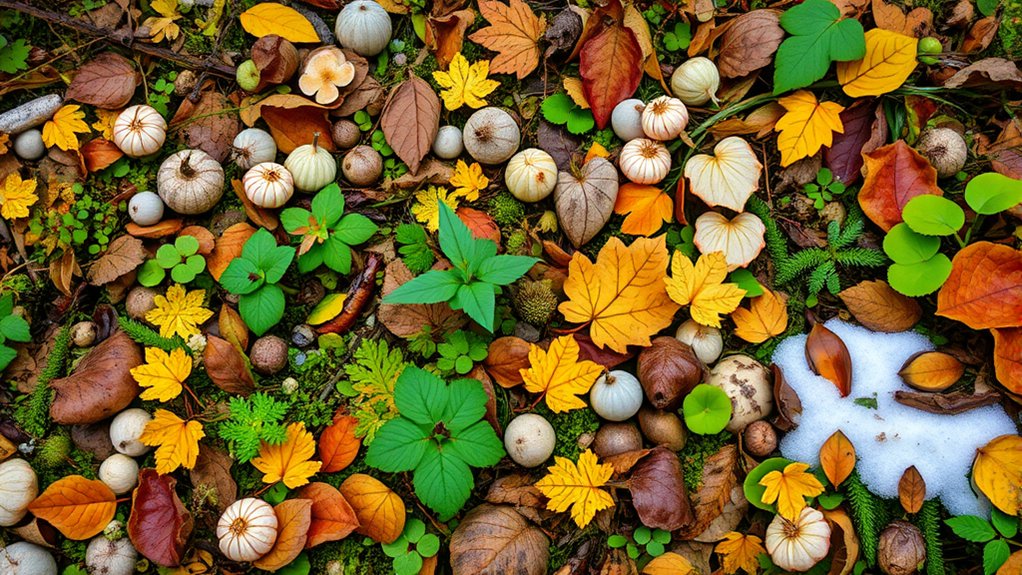
- Monitor local knowledge integration for peak harvest alerts.
- Prioritize regionally dominant plants with fewer toxic look-alikes.
- Adapt to microclimates for ideal foraging.
Utilizing Reliable Resources and Training
When starting on the journey of foraging for wild edibles, having access to reliable resources and training is essential to confirm safety and success.
Allocate your resources wisely by exploring key guidebooks like Sam Thayer’s field guides, which offer detailed photos and toxic look-alike comparisons.
Use tools to track your learning progress, such as digital identification apps like PlantSnap and iNaturalist, which enhance your skills with crowd-sourced data.
Engage in a structured foraging education program, such as the Herbal Immersion Program, to gain thorough knowledge through video lessons and interactive quizzes.
Regularly participate in the review process by joining forums like Forager Chef for peer insights.
With these resources, you’ll confirm informed and safe foraging practices.
Conclusion
In your journey to safely identify wild edibles, think of these guidelines as a compass guiding you through a dense forest of possibilities. By recognizing key mushroom characteristics, understanding common toxic traits, conducting safe edibility tests, and considering seasonal and environmental factors, you’ll be well-prepared for foraging. Always utilize reliable resources and training, ensuring your safety and confidence in the wild. Remember, knowledge is your best ally in distinguishing the edible from the inedible.
Related Posts
3 Must-Have Mushroom Bullet Journals for 2026
Burgeoning mushroom lovers will crave these three must-have bullet journals for 2026, but which is the best fit for your forays and fixes...