
 Mon - Fri: 9:00 - 19:00


Medicinal mushrooms like reishi and turkey tail are gaining attention in cancer research and treatment due to their bioactive compounds. These compounds can inhibit tumor growth, modulate the immune system, and improve outcomes during cancer therapy. Studies suggest mushrooms can lower cancer risk, with specific types like *Ganoderma lucidum* and *Lentinula edodes* offering immune-boosting benefits. While offering promise, they’re still subjected to ongoing research to fully understand their potential in oncology. There’s more information to explore in this evolving field.
Epidemiological Insights on Mushroom Consumption and Cancer Risk
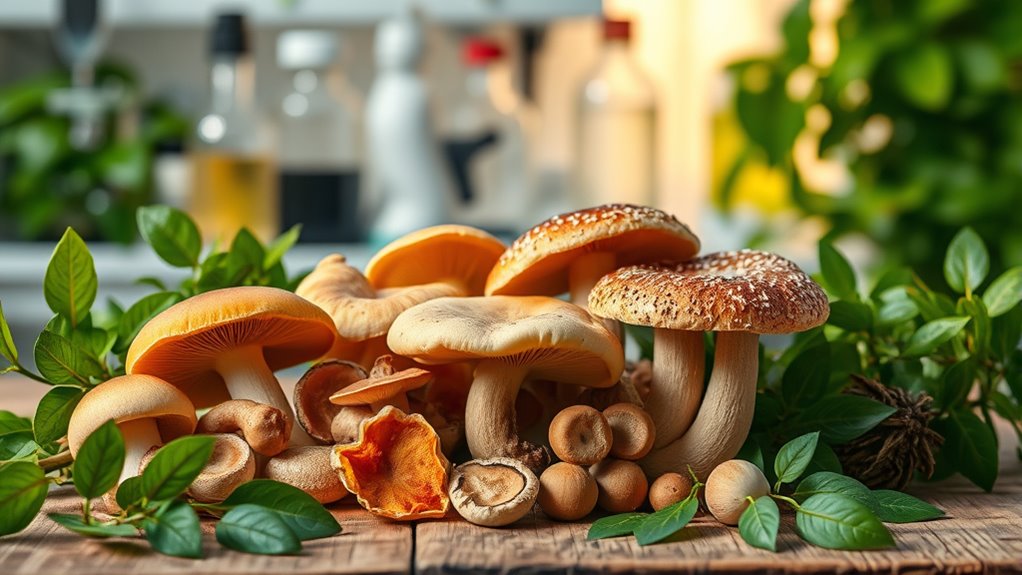
While the relationship between mushroom consumption and cancer risk is a subject of ongoing research, the findings to date have been mixed and complex. Various mushroom varieties and dietary patterns play significant roles in these studies. Mushrooms are rich in phytochemicals and antioxidants, which are beneficial for health and may contribute to cancer risk reduction. In the U.S., large cohorts have shown no significant association between mushroom consumption and the risk of most cancers, except for a marginal increase in lung cancer risk. However, meta-analyses paint a different picture, with some studies suggesting a 45% lower cancer risk from consuming 18g of mushrooms daily. Importantly, geographical disparities exist, with Asian studies often indicating protective benefits, potentially due to different mushroom types and dietary patterns. These findings align with evidence that medicinal mushrooms have therapeutic properties, highlighting the need for further research into how specific mushroom varieties and consumption habits influence cancer risk.
Key Bioactive Compounds With Antitumor Properties
When you explore the antitumor properties of medicinal mushrooms, you’ll find that β-glucans play a significant role in activating the immune system, enhancing its ability to combat cancer cells.
These compounds, found in mushrooms like *Ganoderma lucidum* and *Lentinula edodes*, work in synergy with polysaccharide-peptide complexes to target multiple pathways involved in tumor growth. Research indicates that these bioactive compounds not only inhibit tumor growth but also improve overall health outcomes during cancer treatments.
Β-Glucans Immune Activation
In the domain of cancer research, β-glucans are emerging as powerful bioactive compounds, playing a pivotal role in immune activation and showcasing antitumor properties. By binding to pattern recognition receptors like Dectin-1, they trigger immune modulation and the release of cytokines such as TNF-α and IL-1β, fostering a pro-inflammatory environment that combats cancer cells.
These compounds activate macrophages and neutrophils, enhancing their ability to target tumors. Furthermore, β-glucans stimulate dendritic cells, which in turn prime cytotoxic T lymphocytes and Th1 responses, essential for tumor immunosurveillance. They also boost natural killer cell activity, increasing their cytotoxicity against cancer cells.
Additionally, β-glucans reduce myeloid-derived suppressor cells, thereby reversing immunosuppressive conditions within the tumor microenvironment. Recent studies have highlighted the importance of polysaccharides in immune support, indicating their potential to significantly improve cancer treatment outcomes.
Polysaccharide-Peptide Complexes
Polysaccharide-peptide complexes, known for their potent antitumor properties, are garnering attention in cancer research due to their multifaceted mechanisms of action.
These complexes involve intricate polysaccharide structures that interact with peptides, leading to impressive antitumor effects. They can arrest the cell cycle at critical G0/G1 and G2/M phases by inhibiting CDK/cyclin complexes, and they activate the p21/p53 pathways.
By inducing apoptosis through mitochondrial pathway activation and modulating the Bax/Bcl-2 ratio, they effectively contribute to tumor reduction. Additionally, these complexes suppress angiogenesis by inhibiting VEGF and epithelial-mesenchymal transformation (EMT) pathways.
They enhance immunomodulation by stimulating natural killer (NK) cells and macrophages, while downregulating pro-survival pathways like PI3K/Akt, ultimately reducing tumor growth and metastasis.
Synergistic Multi-Target Compounds
Synergistic multi-target compounds, particularly key bioactive compounds with antitumor properties, represent a promising frontier in cancer research. These compounds excel through multi-target efficacy and synergistic interactions, offering a thorough approach against cancer.
For instance:
- Ganoderma lucidum triterpenoids: These inhibit the PI3K/Akt pathway, curbing tumor growth and metastasis.
- Inonotsuoxides A and inotodiol: Found in *Phellinus linteus*, they combine immune modulation with direct cytotoxic effects.
- Lanosterol: This triterpenoid exhibits significant _in vivo_ antitumor activity in preclinical models.
- Agarikon.1: A multi-species extract, it suppresses colorectal cancer by downregulating the MAPK pathway and employing antiangiogenic effects.
These compounds demonstrate the potential of medicinal mushrooms to target multiple cancer pathways, paving the way for innovative treatments.
Mechanisms of Action in Cancer Inhibition
In exploring the mechanisms of action in cancer inhibition by medicinal mushrooms, you’ll find that these fungi stimulate and modulate the immune system, enhancing your body’s natural defense against cancer.
Polysaccharides in these mushrooms activate key immune cells, like NK cells and T cells, improving immune surveillance and preventing cancer cell proliferation.
Additionally, they contain multi-target compounds that not only protect normal cells from oxidative damage but also reverse multidrug resistance, offering a thorough approach to targeting cancer pathways.
Immune System Stimulation
Even as the world of cancer research broadens, medicinal mushrooms stand out for their unique ability to stimulate the immune system, offering a promising avenue for cancer inhibition. Their immune enhancement properties reveal significant therapeutic potential, as they activate and modulate various immune cells.
Key actions include:
- Immune Cell Activation: Polysaccharides like β-glucans stimulate natural killer (NK) cells, cytotoxic T cells, and macrophages.
- Pathway Modulation: β-glucans modulate signaling pathways, amplifying pro-inflammatory cytokines such as TNF-α and IFN-γ.
- Immune Surveillance: These mushrooms boost antitumor cytokine secretion, enhancing immune surveillance against cancer cells.
- Clinical Applications: PSK from Turkey Tail, approved in Japan, improves survival in colorectal cancer therapy.
These actions underscore the potential of medicinal mushrooms in cancer treatment.
Cancer Cell Proliferation
When considering the complex world of cancer cell proliferation, medicinal mushrooms offer a fascinating array of mechanisms that inhibit cancer growth, showcasing their potential in cancer therapy.
You’ll find that cell cycle arrest plays a significant role in this process. For instance, Ganoderma lucidum β-glucans induce cell cycle arrest, sparing normal cells and halting cancer cell growth.
Similarly, Chaga extract disrupts cancer metabolism by blocking glycolysis, essential in oral cancer cells.
Cordyceps compounds interfere with the MAPK signaling pathway, further affecting cell cycle progression.
Additionally, Trametes versicolor extract reduces breast cancer proliferation through apoptosis.
These mushrooms not only target the rapid division of cancer cells but also disrupt their metabolic processes, paving the way for potential new cancer treatments.
Multi-Target Compound Effects
Although the world of medicinal mushrooms might seem mysterious, their multi-target compounds offer clear and promising effects in cancer inhibition. These compounds work synergistically to target various cancer pathways, enhancing their efficacy.
Consider the following mechanisms:
- Polysaccharides like lentinan induce apoptosis by activating caspases 9 and 3, downregulating Bcl-2, and boosting immune responses.
- Triterpenoids such as ganoderic acids disrupt DNA synthesis, inhibit protease activity, and prompt oxidative stress-mediated cell death.
- Proteins including lecitins bind to cancer cell receptors, block translation, and promote phagocytosis.
- Polycyclic ketones like illudin-S generate reactive oxygen species (ROS) to trigger apoptosis.
These bioactive compounds create a bioactive synergy, effectively engaging with cancer pathways to inhibit tumor growth.
Preclinical Evidence From Laboratory Studies
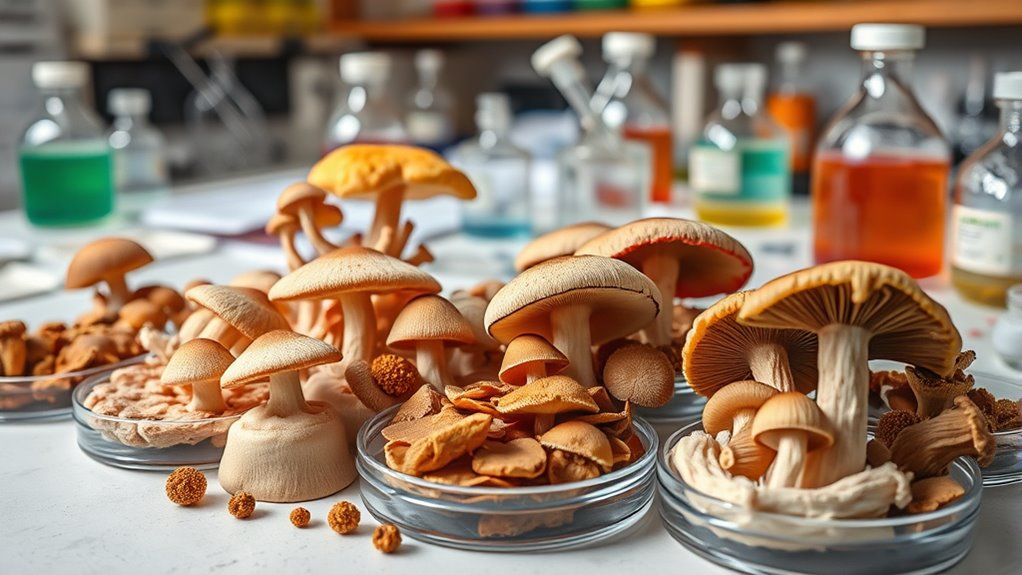
| Mechanism | Mushroom Example |
|---|---|
| NK cell activation | *Coriolus versicolor* |
| T-cell stimulation | *Grifola frondosa* |
| Apoptosis induction | *Ganoderma lucidum* |
| Angiogenesis suppression | *Phellinus linteus* |
This table captures the range of mechanisms through which mushrooms exert anticancer effects, highlighting their potential in future treatments.
Traditional Uses and Contemporary Applications
In contemporary adaptations, mushrooms are increasingly integrated into modern treatments.
Here are four key applications:
- Immune Support: Enhancing immunity through polysaccharides found in species such as *Trametes versicolor*.
- Symptom Management: Reducing chemotherapy side effects with *Agaricus blazei*.
- Adjunctive Therapy: Improving survival rates in cancer patients using polysaccharide-K (PSK).
- Antioxidant Properties: Leveraging triterpenoids in *Ganoderma lucidum* to combat oxidative stress.
These applications highlight the shift from traditional practices to contemporary health solutions.
Safety Concerns and Clinical Considerations
Safety concerns surrounding the use of medicinal mushrooms in cancer treatment are multifaceted and warrant careful consideration.
Safety evaluations must address contamination and production risks, like heavy metal and pesticide residues in supplements, due to unregulated industry standards.
Contamination and production risks, including heavy metals and pesticide residues, are concerns due to unregulated industry standards.
Clinical implications include immune system effects, such as potential autoimmune condition exacerbation and amplified immunotherapy side effects.
Medication interactions, like increased bleeding with blood thinners due to reishi, pose additional risks.
Monitoring challenges arise from inconsistent bioactive compound concentrations, complicating dosing precision.
Patient-specific risks include immunostimulation hazards for autoimmune patients and hepatotoxicity in those with liver dysfunction.
Future Directions in Medicinal Mushroom Research

The exploration of safety concerns sets the stage for a promising outlook in medicinal mushroom research, particularly in cancer treatment.
Future research is set to revolutionize how you view mushroom formulations in this domain. Here’s what’s on the horizon:
- Optimizing Clinical Trials: Larger multicenter studies are essential for validating small trial results and guaranteeing standardized formulations for consistent dosing.
- Deciphering Mechanisms: Understanding how compounds like lentinan activate immune cells can lead to breakthroughs in cancer therapies.
- Combination Therapies: Prioritizing mushroom-chemotherapy pairings might enhance survival benefits and reduce side effects.
- Standardizing Compounds: Isolating high-purity β-glucans and triterpenoids guarantees reliable, effective treatments for cancer patients.
These areas of focus aim to refine and advance medicinal mushroom applications in oncology.
Conclusion
In the curious world of medicinal mushrooms, you’ll find a paradox: these humble fungi, often overlooked in your grocery aisle, hold immense potential in cancer research. While you might think something so ordinary couldn’t possibly influence cancer treatment, their bioactive compounds say otherwise, showing promise in laboratory studies. However, the journey from lab to clinical use is fraught with challenges, safety concerns, and the need for more research. So, keep an eye on those mushrooms; they’re more than just pizza toppings.
Related Posts

Exploring Nutritional Benefits of Medicinal Mushrooms
Discover how medicinal mushrooms enhance immune function and promote overall health—could they be the superfood your diet is missing?

Medicinal Mushrooms for Immune System Support
Gripping research reveals how medicinal mushrooms supercharge your immune system, but their most powerful benefits might surprise you.