
 Mon - Fri: 9:00 - 19:00

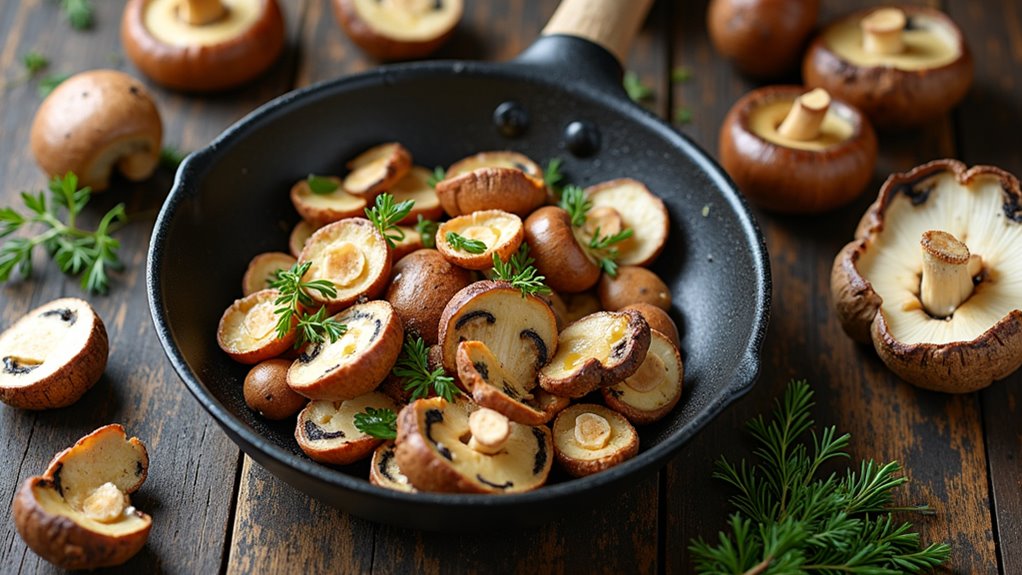
To cook mushrooms perfectly, start by cleaning them with a dry brush or damp cloth, then cut them into uniform ¼-inch pieces. Use a heavy-bottomed pan over medium-high heat, allowing mushrooms to release their moisture before browning. Don’t disturb them for 2-3 minutes during the initial sear, and add salt only after browning. Enhance flavor with fresh herbs like thyme and rosemary. These fundamental techniques pave the way for mastering more advanced mushroom preparations.
Essential Cleaning and Storage Practices
Proper cleaning techniques form the foundation of safe and enjoyable mushroom preparation. You’ll need to adapt your cleaning methods based on the mushroom variety you’re working with, as each type requires specific attention.
Clean your mushrooms with care and precision – each variety needs its own specific cleaning approach for safe, delicious results.
For cultivated mushrooms like button or cremini, a simple dry brush or damp cloth will suffice, while wild varieties demand more thorough cleaning approaches. Store your cleaned mushrooms in breathable containers to prevent moisture buildup and extend their shelf life.
When dealing with wild mushrooms such as morels or hen of the woods, you’ll want to use specialized cleaning methods that include soaking and rinsing to remove trapped dirt.
For chicken of the woods, trim the woody bases and give them quick rinses, being careful not to waterlog them.
Chanterelles require targeted spraying through a colander to remove debris from their distinctive ridges, while cauliflower mushrooms need vertical splitting for thorough cleaning.
Proper Cutting and Size Guidelines
When preparing mushrooms for cooking, mastering the right cutting techniques and size guidelines will greatly impact your dish’s final texture and flavor profile. Position your mushrooms stem-side down on the cutting board, and use a sharp chef’s knife to make precise cuts parallel to the stem, moving your knuckles away from the blade as you progress.
| Cutting Technique | Size Variation | Best Used For |
|---|---|---|
| Slicing | 1/8 to 1/4 inch | Stir-fries, Sauces |
| Cubing | 1/2 inch pieces | Soups, Casseroles |
| Quartering | Even segments | Roasting, Grilling |
You’ll want to match your cutting techniques to your recipe’s requirements, ensuring uniform sizes for even cooking. Remember that thinner slices cook quickly and are ideal for quick-cooking methods, while thicker cuts provide a more substantial, meaty texture.
Pan Selection and Heat Management
Successful mushroom cooking starts with selecting the right pan and managing heat effectively. When choosing among various pan types, you’ll want to use heavy-bottomed options like cast iron or enameled Dutch ovens for ideal heat distribution and browning.
For a 1-pound batch of mushrooms, select a 10-inch pan, while a 12-inch pan works better for 1.5 pounds to prevent overcrowding.
Control heat levels by starting with medium-high heat, which you’ll know is ready when water droplets sizzle on the surface. Maintain this temperature throughout cooking to promote browning rather than steaming.
If you’re adding liquids like broth or wine, briefly reduce the heat to prevent splashing, then increase it again for final caramelization.
Key Steps for Perfect Browning
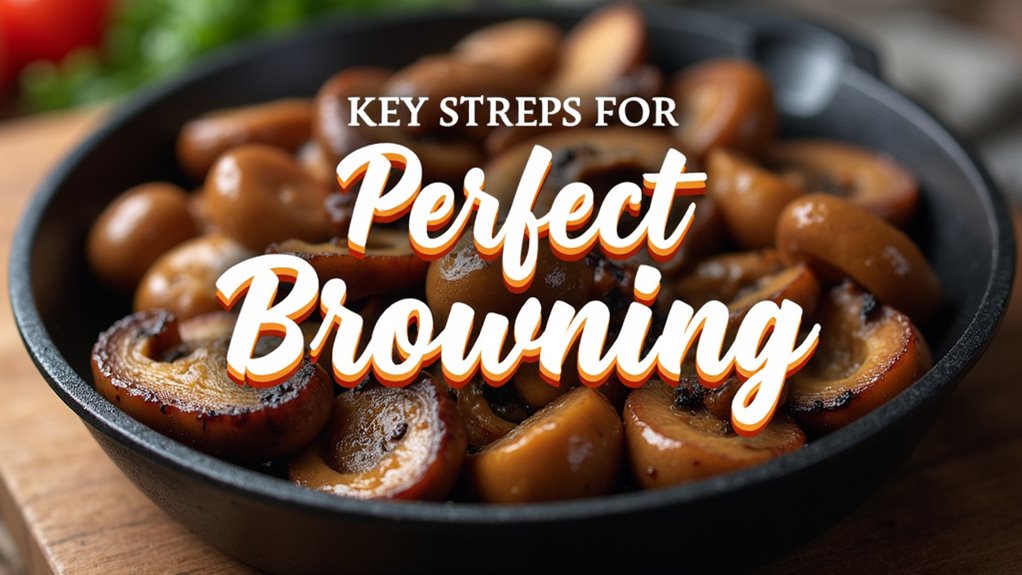
Three fundamental steps establish the foundation for perfectly browned mushrooms: thorough cleaning without excess moisture, uniform cutting, and proper timing of salt application.
You’ll achieve ideal browning benefits by patting mushrooms with a damp paper towel rather than rinsing them, which helps prevent unwanted moisture absorption.
For effective moisture management, start cooking your mushrooms over medium-high heat without any fat, allowing them to release their natural water content.
Cut your specimens into ¼-inch uniform pieces, and let them sear undisturbed for 2-3 minutes before occasional stirring.
Remember to add salt only after browning is complete, as early salting can draw out moisture and interfere with the caramelization process.
Finally, deglaze your pan with wine, broth, or vinegar to capture all the flavorful browned bits.
Adding Seasonings and Aromatics
The artful addition of seasonings and aromatics transforms basic mushrooms into extraordinarily flavorful dishes. You’ll achieve the best flavor profiles by combining fresh garlic, rosemary, thyme, sea salt, and black pepper before cooking begins, while using a mortar and pestle to grind herbs releases their maximum potential compared to pre-ground alternatives.
Fresh herbs and aromatics, ground moments before cooking, elevate simple mushrooms into an extraordinary culinary experience bursting with complex flavors.
To enhance your herb combinations further, consider creating versatile seasoning mixtures that you can blend into mayonnaise, sour cream, or healthier options like cottage cheese for accompanying sauces.
When roasting mushrooms alongside vegetables or potatoes, infuse your olive oil with your preferred seasoning blend to guarantee even distribution of flavors throughout the dish.
For lighter options, you can substitute dairy-based ingredients with yogurt or hummus while maintaining rich, complex tastes.
Conclusion
Did you know that mushrooms can lose up to 40% of their nutrients when boiled, compared to just 15% when sautéed? You’ll find that mastering these basic mushroom cooking techniques won’t just improve your culinary skills, but will also help you retain more of those valuable nutrients. By following proper cleaning, cutting, and cooking methods, you’re now equipped to transform any mushroom variety into a perfectly browned, flavorful dish.
Related Posts
The 4 Best Mush Butter Dishes for Spreading and Sizzling Flavor in 2026
Uplift your cooking with top mush butter dishes for 2026, but discover which one will keep flavors fresh—read on to see which fits you best.
3 Best Dried Gourmet Mush Mixes You Have to Try Now
Daringly delicious, these three dried gourmet mushroom blends tempt with flavor feats—but which one truly suits your kitchen, and why will it...